ការបិបន៍នា
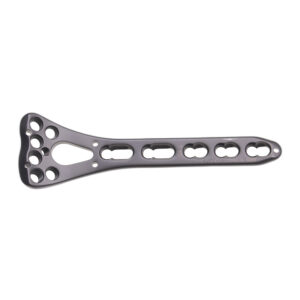
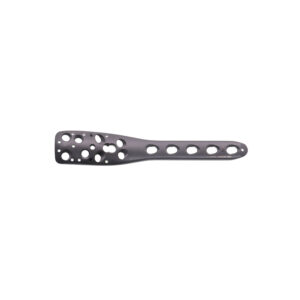
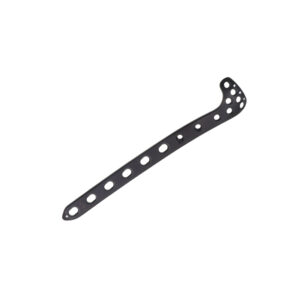
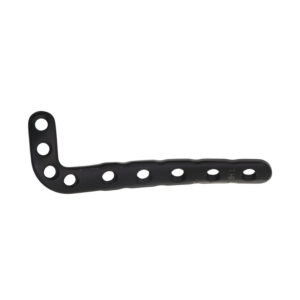
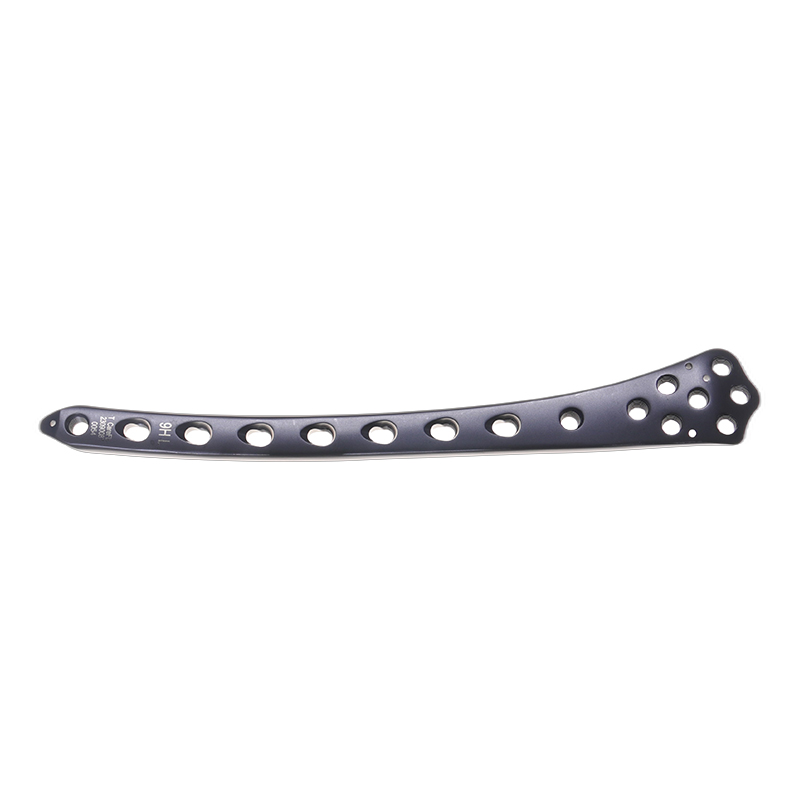
LCP Lateral Distal Femur Plate
q&នៃក
សំណួរទី 1: What is an LCP Lateral Distal Femur Plate used for?
ក 1: It is used for fixation of distal femoral fractures, including intra-articular, extra-articular, supracondylar, and periprosthetic fractures.
សំណួរទី 2: Why is the plate placed laterally on the distal femur?
A2: The lateral placement provides optimal access for reduction and fixation while preserving the medial soft tissue envelope and maintaining mechanical alignment.
សំណួរទី 3: What is the main advantage of an LCP design?
A3: The locking compression plate system combines angular stability with compression capability, ensuring secure fixation even in osteoporotic bone.
សំណួរទី 4: What materials are used for the Lateral Distal Femur Locking Plate?
ក 4: It is made of medical-grade titanium alloy (Ti-6AL-4V) or stainless steel for strength, corrosion resistance, and biocompatibility.
q5: How does the anatomical design help during surgery?
ក 5: The plate is anatomically pre-contoured to fit the lateral aspect of the distal femur, reducing the need for intraoperative bending and aiding accurate alignment.
q6: What types of screws are compatible with this plate?
ក 6: It uses a combination of 5.0 mm locking screws, 4.5 mm cortical screws, and occasionally cancellous screws depending on fracture configuration.
q7: Can the LCP Distal Femur Plate be used in osteoporotic or comminuted fractures?
A7: បាត, the fixed-angle locking construct provides excellent stability in poor-quality bone and comminuted fracture patterns.
សំណួរទី 8: What are the typical plate lengths and hole options?
ក 8: Plates are available in various lengths (5 តោកាន់អាយ័តនិ 13 holes) to accommodate different fracture types and patient anatomies, for both left and right sides.
សំណួរទី 9: What surgical approaches are commonly used for plate insertion?
A9: The lateral approach to the distal femur is commonly used, allowing direct visualization of the articular surface and fracture fragments.
Q10: What complications may occur after distal femur plating?
A10: Potential complications include nonunion, infection, implant failure, or joint stiffness, which can be minimized with proper surgical technique and rehabilitation.