ការបិបន៍នា
lcp vouls disal disty
q&នៃក
សំណួរទី 1: What is an LCP Volar Distal Radius Plate used for?
ក 1: It is used for fixation of distal radius fractures, including extra-articular and intra-articular fractures, as well as osteotomies and reconstructions.
សំណួរទី 2: Why is the volar approach preferred for distal radius fixation?
A2: The volar (palmar) approach allows safer access, minimizes tendon irritation, and provides stable fixation with fewer soft tissue complications.
សំណួរទី 3: What are the advantages of using a locking compression plate (LCP)?
A3: LCP technology provides angular stability, allows for early mobilization, and maintains fixation strength even in osteoporotic bone.
សំណួរទី 4: What is the plate made of?
ក 4: The plate is typically made from medical-grade titanium alloy (Ti-6AL-4V) or stainless steel, ensuring strength and biocompatibility.
q5: What screw types are compatible with this plate?
ក 5: It uses a combination of locking head screws, cortical screws, and variable-angle locking screws for precise fixation.
q6: How does the anatomical design help during surgery?
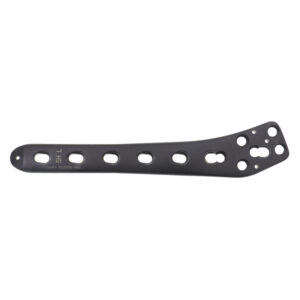
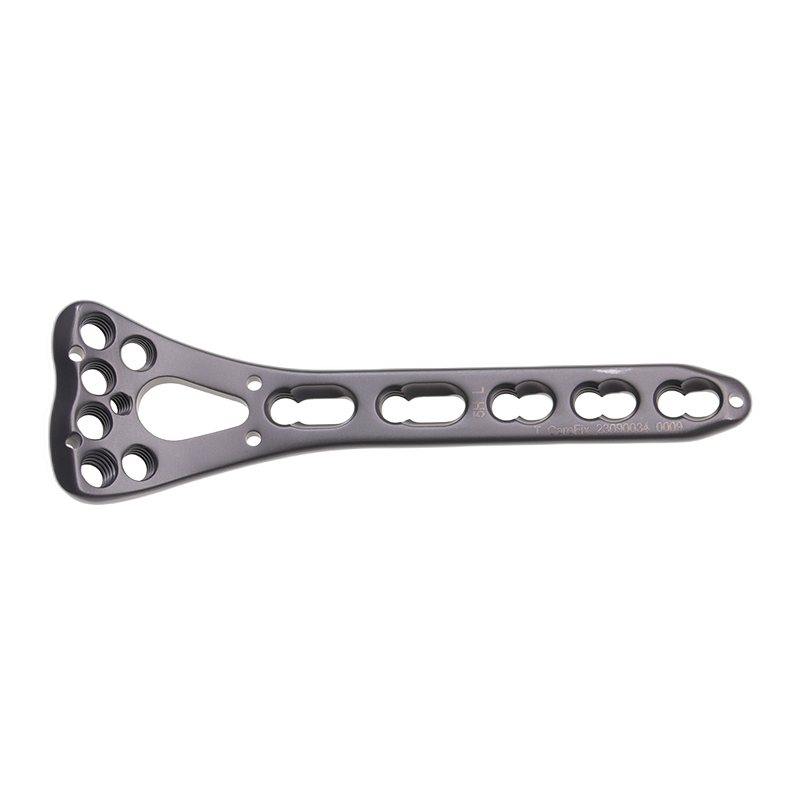
ក 6: The plate is anatomically contoured to fit the volar surface of the distal radius, reducing the need for intraoperative bending and improving alignment.
q7: Can this plate be used for osteoporotic fractures?
A7: បាត, the locking mechanism provides secure fixation in osteoporotic bone, making it suitable for elderly patients.
សំណួរទី 8: What plate sizes and hole configurations are available?
ក 8: Plates are available in multiple lengths and configurations (narrow, standard, or wide) with various distal screw hole patterns for different fracture types.
សំណួរទី 9: What are the common complications after volar plate fixation?
A9: Possible complications include tendon irritation, loss of reduction, screw penetration into the joint, or volar prominence if improperly placed.
Q10: When can patients start wrist motion after surgery?
A10: Early controlled wrist movement can typically begin within 1–2 weeks post-operation, depending on fracture stability and surgeon preference.