Description
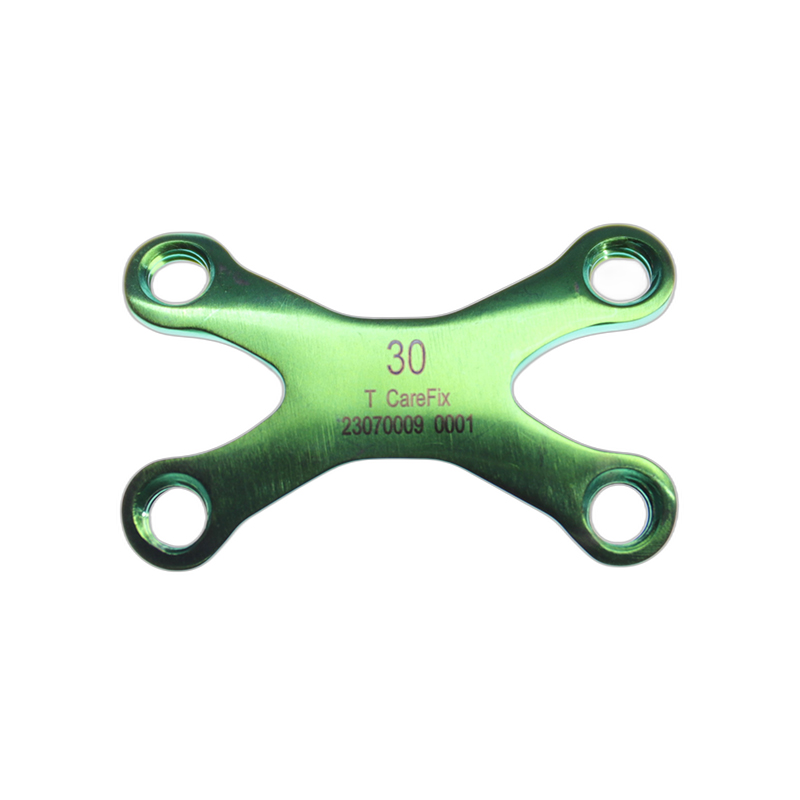
LCP X-Plate
Q&UN
T1: What is an X-shaped Locking Plate used for?
A1: The X Locking Plate is designed for fixation and stabilization of small bone fractures, commonly used in hand, wrist, pied, and ankle surgeries, especially where multiple fracture lines intersect.
T2: Why is it called an “X-shaped” plate?
A2: The plate has a cross or “X” configuration that allows fixation in four directions, offering multidirectional stability at the fracture or fusion site.
T3: What material is the X Locking Plate made from?
A3: It is usually made of titanium alloy or medical-grade stainless steel, ensuring excellent biocompatibility, durability, and corrosion resistance.
T4: What are the advantages of the X-shaped design?
A4: The X shape provides optimal screw placement from multiple angles, improving stability and minimizing the risk of rotational or angular displacement.
Q5: In what types of surgeries is the X Locking Plate most commonly used?
A5: It is frequently used in metacarpal, metatarsal, tarsal, and distal radius fractures, as well as arthrodesis of small joints.
Q6: How does the locking mechanism improve fixation?
A6: The locking screws create a fixed-angle construct with the plate, enhancing stability even in osteoporotic or comminuted bone.
Q7: Are there different sizes or variations of the X Locking Plate?
A7: Oui, it comes in various sizes and hole configurations to suit different anatomical regions and surgical needs.
Q8: Can the X-shaped plate be contoured during surgery?
A8: Many X plates are pre-contoured for anatomy-specific fit, but some can be slightly bent intraoperatively to adapt to the bone surface.
Q9: What are the main benefits compared to standard straight plates?
A9: The X plate allows multi-directional screw fixation, better control of complex fracture patterns, and enhanced torsional resistance.
Q10: What are the expected outcomes after using an X Locking Plate?
A10: It provides stable fixation, supports early mobilization, reduces the risk of implant failure, and promotes faster fracture healing.