Tavsif
LCP W-plate
Sh&A
1-chora: What is a W-shaped Locking Plate used for?
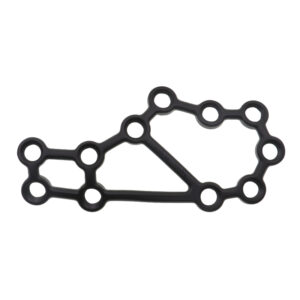
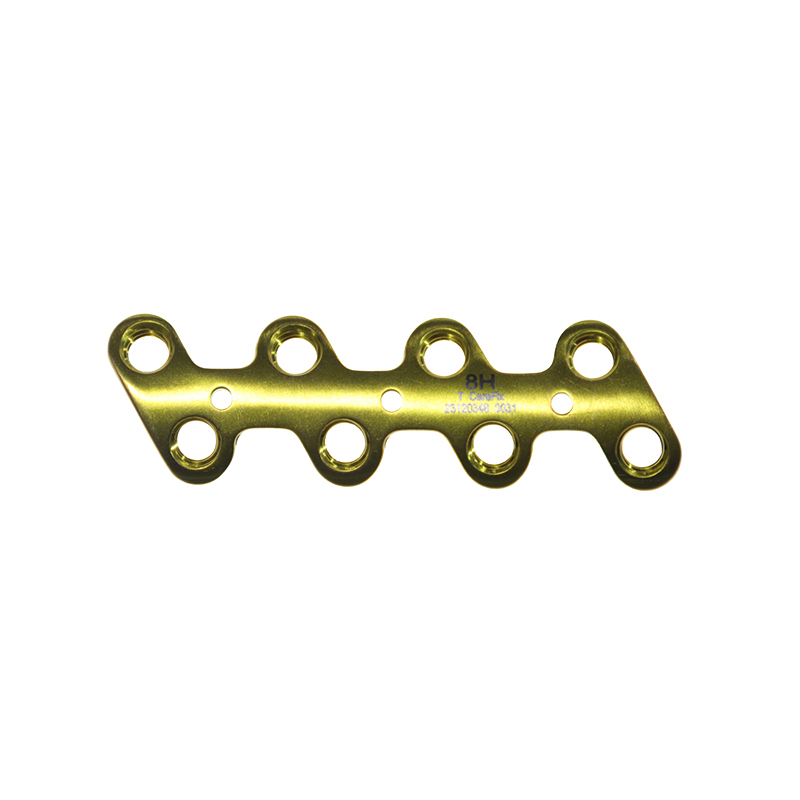
A1: The W Locking Plate is commonly used for fracture fixation and fusion in small bones, particularly in foot and ankle surgeries such as midfoot and tarsometatarsal (TMT) arthrodesis.
2-savol: How does the W-configuration enhance biomechanical stability compared to straight plates?
A2: The W-design provides:
Multiplanar fixation through divergent locking screws
Enhanced pull-out resistance in osteoporotic bone
Superior support for articular fragments
Resistance to varus/valgus collapse
Load distribution across a wider area
So'ymoq: What materials are used to manufacture the W Locking Plate?
A3: It is typically made from titanium alloy or stainless steel, offering biocompatibility, strength, and corrosion resistance.
Q4: In what types of surgeries is the W Locking Plate most commonly used?
A4: It is mainly used in midfoot fusion, metatarsal fractures, tarsometatarsal joint fixation, and other small bone reconstructions.
Q5: What sizes or configurations are available for the W Locking Plate?
A5: It comes in various lengths and hole configurations to accommodate different bone sizes and surgical techniques.
Chora: Can the W-shaped plate be combined with other fixation devices?
A6: Yes, it can be used alongside screws, compression plates, or bone grafts to achieve optimal stability and bone fusion.
Q7: What are the advantages of using a W Locking Plate compared to a straight plate?
A7: The W-shape provides better anatomic conformity, increased surface contact, and improved resistance to rotational and bending forces.
Q8: What is the recommended postoperative rehabilitation protocol?
A8: Rehabilitation typically involves:
Early range of motion of adjacent joints (within 1-2 weeks)
Protected weight-bearing for 8-12 weeks
Progressive strengthening after radiographic healing evidence
Regular follow-up to monitor joint function and healing