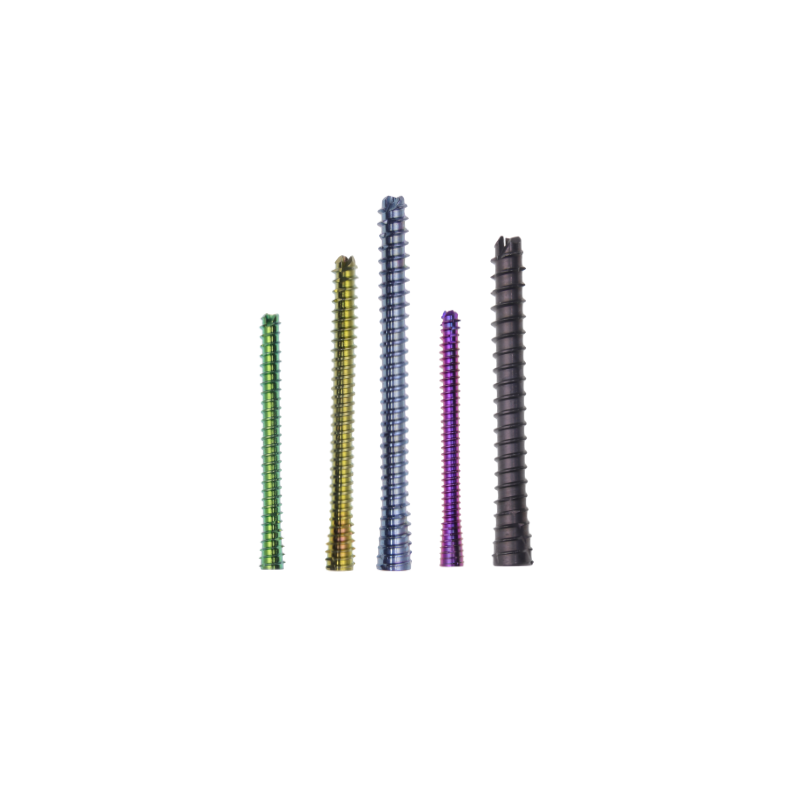
คำอธิบาย
Headless Compression Cannulated Screw
ถาม&ก
ไตรมาสที่ 1: What is a Headless Compression Cannulated Screw used for?
A1: It is designed for fixation of small bone fractures where minimal soft tissue irritation and countersinking are required, such as scaphoid or metatarsal fractures.
ไตรมาสที่ 2: Why is it called “headless” Cannulated Screw?
A2: Because it has no prominent head, allowing it to be fully buried within the bone and minimizing soft tissue irritation.
ไตรมาสที่ 3: How does it create compression?
A3: Through differential pitch threading along the screw length, where the leading and trailing threads have different pitches to draw fragments together.
ไตรมาสที่ 4: What are the typical sizes for Headless Compression Cannulated Screw?
A4:Common diameters include 2.0/2.5/3.0/4.5/6.5 mm, with varying lengths from 10 mm to 120 mm, depending on anatomical application.
คำถามที่ 5: What are the advantages over it?
A5: They provide smooth bone surfaces, eliminate screw head prominence, and reduce the need for later removal.
คำถามที่ 6: What are the most common complications?
A6: Includes screw protrusion if not fully seated, fracture distraction if improperly sized, and difficult removal due to bone overgrowth.
คำถามที่ 7: What are common applications?
A7: Scaphoid fractures, metacarpal fractures, talus fractures, and small joint fusions.